Nandita Haksar: Human rights discourse has been turned into a weapon - Part One
Indian human rights lawyer, educator, and writer Nandita Haksar boldly argues that the idea of the “universality” of human rights has been controversial from the very beginning. Haksar, who has helped secure many ...
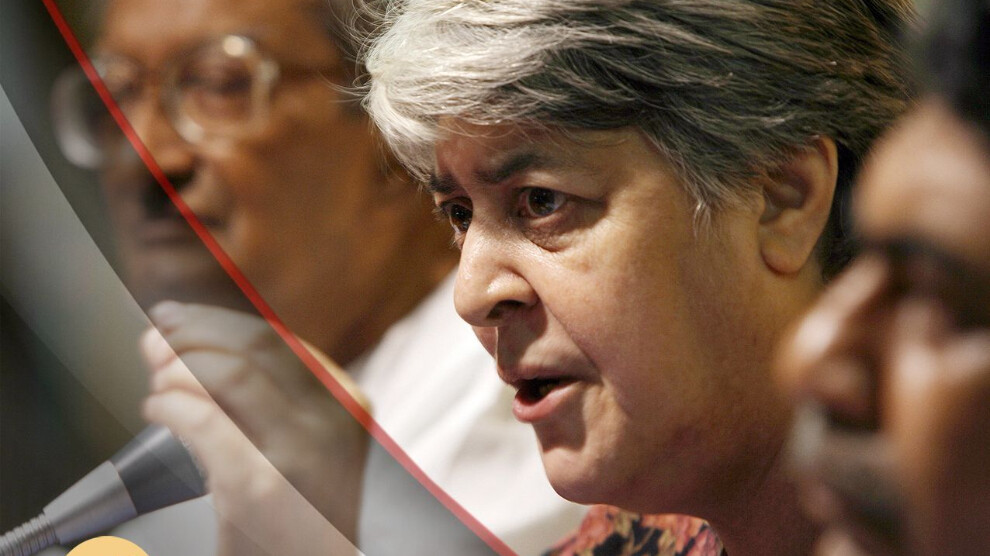
Indian human rights lawyer, educator, and writer Nandita Haksar boldly argues that the idea of the “universality” of human rights has been controversial from the very beginning.
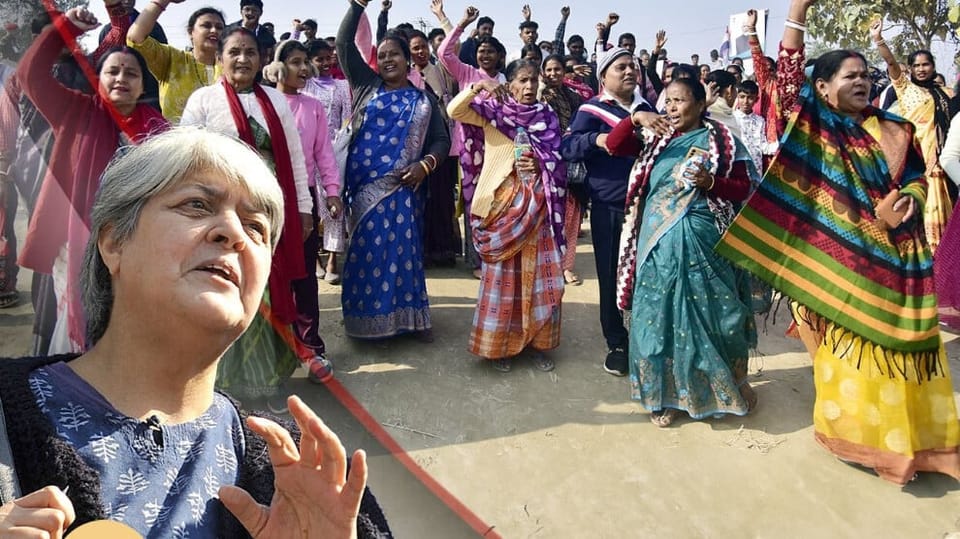
Haksar, who has helped secure many landmark legal decisions in the fields of human rights and refugee law, has not only taken on cases in Indian courts but has also presented arguments before international courts and committees. Emphasizing that human rights linked to trade have been instrumentalized, Haksar also points to the ineffectiveness of international institutions such as the UN, while noting that organizations like Amnesty International have harmed legitimate armed struggles against colonialism and racism.
In the first part of our two-part interview with Nandita Haksar, we discussed the West’s hypocrisy regarding universal human rights and how this concept has been turned into a weapon for implicit policies of interest.
You describe how the discourse on human rights no longer serves the cause of emancipation, but has become an instrument of Western foreign policy. How exactly did this shift from a tool of liberation to a means of global dominance come about?
On December 10, 1948, the United Nations General Assembly in Paris passed the Universal Declaration on Human Rights as a common standard of achievement for all peoples and all countries. The Declaration has since been translated into over 500 languages – and has paved the way for the adoption of more than 70 human rights treaties.
The idea of “universality” of human rights was contested from the start. The Universal Declaration of Human Rights was opposed by eight countries for very different reasons: South Africa under Apartheid opposed the Declaration on the ground it treated people of all races equally. The South African government abstained to protect its policy of institutionalized racial segregation (apartheid), which directly violated the declaration's principles of equality.
Which other countries opposed the Declaration?
Saudi Arabia did not sign the 1948 Universal Declaration of Human Rights (UDHR), primarily objecting to provisions on freedom of religion and gender equality, which they argued conflicted with Islamic law; while not signing the UDHR, they remain a UN member with obligations to uphold its principles.
The Soviet Union and the Ukrainian SSR, the Belarusian SSR, Yugoslavia, Poland, and Czechoslovakia did not sign the UDHR on totally different grounds. The socialists argued that the Declaration imposed a Capitalist world view on the world; a world view which was based on the primacy of individual human rights over social and economic rights.
Throughout the Cold War, there was a clear division between the Western countries and the Soviet Union (supported by the Third World countries) about which human rights should be included and protected by international human rights law. The debate was not about universality but the need to recognize economic, social and cultural rights in addition to recognizing individual civil and political rights.
What result did this debate have in the end?
Finally, it was agreed that there would be two Covenants, the Covenant of Civil and Political Rights and the Covenant of Economic, Social and Cultural Rights. These were passed by the United Nations in 1966 but were not ratified till 1976. And they became the basis of international human rights law.
The USA did not ratify the two Covenants until 1992, after the disintegration of the Soviet Union.
I should add that India, along with some other Third World states, took the relativist position that universal human rights could be enforced only in advanced industrial states and that became the justification for not complying with international human rights law.
Precisely because of its wide appeal that human rights discourse became a powerful tool in the hands of governments, especially Western states, NGOs and corporations, to violate national sovereignty of countries around the world and even for justifying wars.
Can you give some examples?
First, international human rights organizations, including respectable names like Amnesty International, took stands which were in consonance with Western foreign policies. Amnesty International’s stand of not adopting Nelson Mandela as a prisoner of conscience is a dramatic example. This is well documented by Cosmos Desmond, Director of the British Section of Amnesty International at the time. The documentation is done in his book Persecution East and West: Human Rights, Political Prisoners, and Amnesty (1983). Amnesty International’s stand on armed resistance served to de-legitimize armed struggles against colonialism, imperialism and racism.
Second, human rights were weaponized when they were linked to trade. Human rights conditionality is the practice of linking foreign aid, loans, or trade agreements to a recipient country’s compliance with human rights standards. While intended to promote democracy and rule of law, these conditions often create paternalistic, neo-colonialist pressures. Critics argue that in an unequal world order these conditionalities often marginalize vulnerable populations and fail to address systemic needs.
Amnesty International decided to focus on India in early 1990, and it coincided with the time India decided to liberalize its economy and open the country to private capital. Human rights discourse was allied with neo-liberalism and was a tool for facilitating the movement of capital and breaking national barriers protecting indigenous industry and business. In other words, freedom became tied to free markets. In many ways, the human rights discourse served the same purpose as the Bible did for white colonial missionaries and their civilizing missions.
Third, liberal human rights discourse based on individual human rights has been complicit in breaking the solidarity of people:
(a) By emphasizing the right to self-determination of peoples, especially projecting ethnic fault lines (which emerged due to borders and boundaries made by colonial powers).
(b) By emphasizing individual freedom and autonomy. This creates tension with the idea of family solidarity by shifting the focus from collective, hierarchical family units to individual rights. So, this allows them to champion rights of Muslim women while demonizing Muslim men in the so-called war on terror. Imperial feminism has been responsible for justification of brutal torture of Muslim men accused or suspected of “terrorism” and has also rationalized large scale human rights violations in the name of upholding women’s rights.
(c) The liberal human rights discourse undermines the right to collective bargaining by the working class by not including workers' rights within the ambit of workers' rights, which are dealt with separately by the ILO. Human rights discourse does not recognize the violations of human rights that are caused by unjust and unequal world order and the unchecked power of the corporations.
(d) Human rights discourse does not recognize the human rights violations cause world over, but especially in the global south by imperialism and neo-colonialism which has led to starvation, housing crisis, and many times death due to diseases which can be treated.
Are there also other examples in recent years that you find important?
Lastly, most recently, the human rights narrative has been used to justify wars, from Yugoslavia to Iraq and from Libya to Afghanistan and, more recently, Iran. Some lawyers even speak of a “human rights-based approach to drones” and write about how wars and counter-insurgency operations can be carried out in accordance with the principles of human rights.
If we are to include women’s rights within the ambit of the human rights discourse, then we can see how women’s rights have been weaponized to justify invasions, violations of sovereignty and wars. These wars are a part of the imperialist strategy to impose their dominance over the global south.
In the ongoing US war against Iran, Israeli leaders and security state actors have explicitly invoked the oppression of Iranian women by the regime and its proxies to justify drone strikes, sabotage, or missile attacks as supporting “democracy” and “women’s rights” as posts by the IDF illustrate. https://www.idf.il/en/articles/2024/iran-and-its-proxies-oppression-of-women/
This narrative has been denounced by feminists in Iraq, Afghanistan and now in Iran and they have condemned international feminists for imperialist hijacking of feminist discourse. Feminists like Katharina Motyl have condemned use of women’s rights to justify wars as imperial feminism. Her writings expose how women’s rights are repeatedly mobilized throughout history to justify military expansion.
Lila AbuLughod is perhaps the most well-known critic of Western feminists, who, she has argued in her books, helped legitimize the invasion of Afghanistan by framing Afghan women as universally oppressed by “Muslim culture,” thereby reproducing colonial and Orientalist binaries between “liberal West” and “backward Islam.”
You have been campaigning as a human rights activist for decades. The philosopher Hannah Arendt spoke of the ‘right to have rights’, yet worldwide, the dignity and rights of the majority of people are being systematically stripped away by those in power. How can people resist this deprivation of rights?
The "right to have rights" refers to the fundamental necessity of belonging to a political community (citizenship) to possess any legal rights at all. As of mid-2025, over 117 million people are forcibly displaced worldwide, including approximately 42.5 million refugees. This total includes refugees under the UNHCR mandate, Palestinian refugees under UNRWA, and people in refugee-like situations, marking the highest levels of displacement on record, with 71% of refugees hosted in low- and middle-income countries.
I have been deeply involved with refugee rights in India, where the problem is not as acute as many other countries, but it is as distressing. India began life as an independent country in the aftermath of a bloody Partition and millions of refugees. Even though India has not signed the UN Covenant on Refugees, it has welcomed refugees from all parts of the world.
India is a member of the Executive Member of the UNHCR and the UNHCR does function in New Delhi. However, India too has become increasingly strict about refugees and, under the new laws recently passed, refugees are treated as illegal migrants. I know this is a trend in the West but I would have hoped India had continued its liberal policies towards refugees.
Can you elaborate a little more on how India deals with refugees?
The refugees have the right to life and the rights against arbitrary use of law, but they have no or very little way of enforcing their rights. UNHCR has virtually withdrawn from taking responsibility and the government treats refugees as illegal migrants and has detained many at detention centres.
In Northeast India, especially in the state of Manipur, we have seen escalating violence, especially since 2023 and according to the 2024 Global Report on Internal Displacement (GRID) by the Geneva-based Internal Displacement Monitoring Centre (IDMC), ethnic violence in Manipur triggered 67,000 displacements in 2023 – the highest in South Asia.
There are a few NGOs who purportedly work for refugees but they do not confront the state on behalf of the refugees in India. Refugees do protest outside the office of the UNHCR but that has proved quite ineffective.
Are there also other fields where people in India continue to struggle for their rights?
In addition to the refugees and migrants, our own citizens are facing an unprecedented crisis with workers protests across the country, especially by contract workers who are not being given the statutory minimum wages.
The people are resisting by coming out on to the streets and protesting again and again despite the arrests, and threats and intimidation. But the institutions which could deliver justice, such as labour courts, are no longer functioning. The only way any people anywhere can sustain resistance is by having their organizations. The national trade unions have intervened but the trade union movement has become weakened with the growth of flexible labour markets and most of our workers are in the unorganized sector, which the trade union movement has not reached.
The government has responded by raising wages, but the raise is hardly enough to cover the rising prices, especially because of the shortage of LPG gas after the US war in Iran. This has affected cooking gas and industries such as the garment industry, which needs to dye cloth. Thus, thousands of workers have been thrown out of work.
The government has evacuated many thousands of workers stuck in the Gulf nations, but once they come back there are no jobs. India is the world's largest recipient of remittances, with record high inflows amounting to $135 billion (€117 billion) in 2025, according to government data. If the war continues, thousands of poor families will be deprived of their main source of income.
The days ahead are going to bring untold sufferings on our people.
About Nandita Haksar
Nandita Haksar was a journalist before her involvement in the women's rights movement forced her to take to law. For the past three decades, she has worked as a human rights lawyer, campaigner and writer. She has set many precedents in human rights and refugee law. She has taken up cases in the courts in India as well as appearing before international courts and committees. She has evolved and taught courses on human rights in various universities.
Haksar's publications include: Ego and other Poems (1972) Demystification of Law for Women (1986); the book has been translated into regional languages and extensively used by women's groups for spreading legal literacy; Nagaland File: A Question of Human Rights; (the co-edited book which first exposed the human rights violations being committed by the Indian security forces in the North East of India); Framing Geelani, Hanging Afzal: Patriotism in the Time of Terror (2007) in which she writes about her experience of defending two Kashmiri Muslims accused of attacking the Indian Parliament, and Rogue Agent: How India's Military Intelligence Betrayed the Burmese Resistance (2009) in which she exposed the RAW, Indian’s external intelligence agency ; The Judgement That Never Came: Army Rule in North East India (with Sebastian Hongray, 2011); ABC of Naga Culture and Civilization (2011) which has been taught in schools for Naga children and; Across the Chicken Neck: Travels in North East India (2013); The Many Faces of Kashmiri Nationalism: from Cold War to the present Times (2015) and Framed as a Terrorist (with Mohammad Aamir Khan) (2016)
She was awarded a Degree of LL.D. (Honoris Causa) from NALSAR in 2015 in recognition of her work in the field of human rights.