Nandita Haksar: Build relations with everyone, be enemies with no one! - Part Two
With a population of 1.47 billion, India has become the most populous country in the world, characterized by multiple identities, multiple faiths, and broad cultural diversity. Nandita Haksar, who has worked for thirty ...
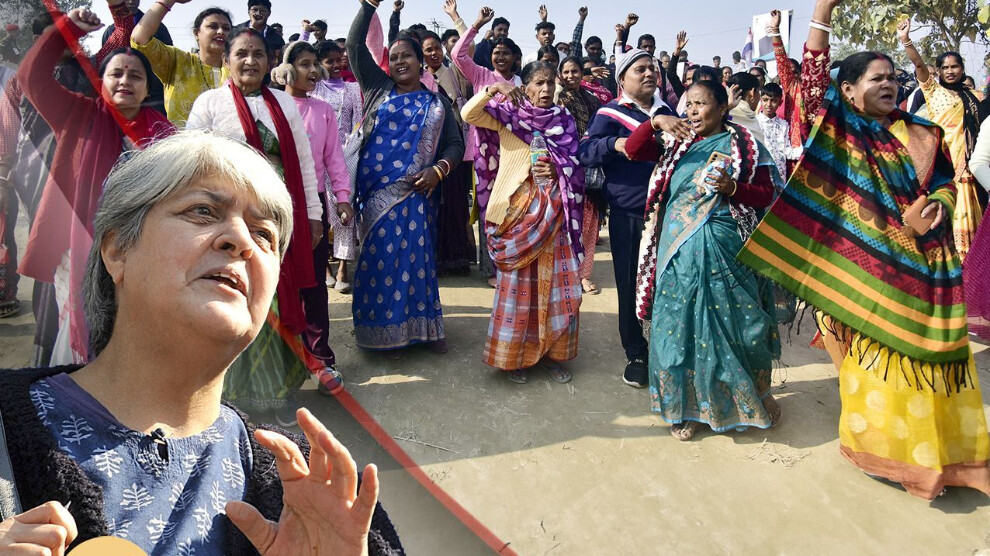
With a population of 1.47 billion, India has become the most populous country in the world, characterized by multiple identities, multiple faiths, and broad cultural diversity.
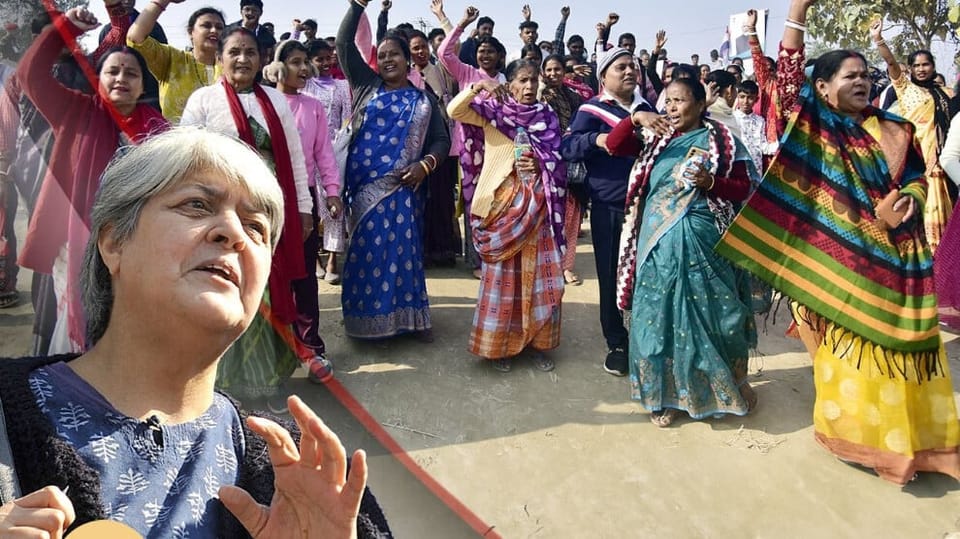
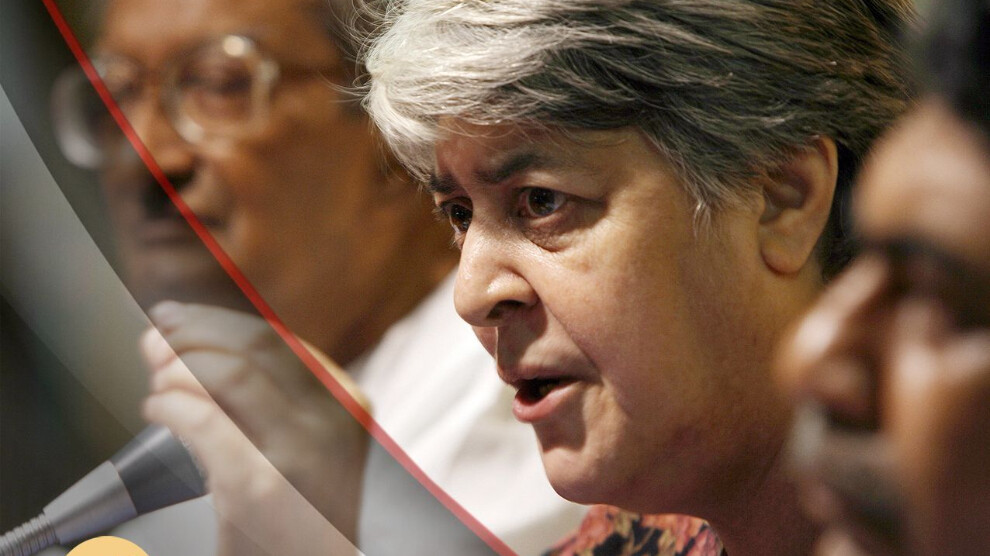
Nandita Haksar, who has worked for thirty years in the country as a human rights lawyer, activist, and writer, evaluates the internal balances of this structure and its role in global politics. Referring to India’s pragmatic, “multi-alignment” focused foreign policy, conducted without making enemies, she says, “Foreign policy is an extension of domestic policy.”
In the second part of our interview with Haksar, we discussed India’s approach to the IMEC Corridor, its relations with China and Israel, especially alongside those with its neighbors, and how it shapes its policy of “strategic autonomy,” aimed at building a bridge between the West and the Global South.
The first part of this interview can be read here.
India is one of the most diverse multi-ethnic nations on earth. Despite this complexity – with different cultures, languages and customs across the individual states – is the state capable of protecting its citizens’ ‘right to rights’? So how does it work?
In 1947, when India became an independent country, there were some 552 states within the geographical boundaries of the Dominion of India. You can imagine, it was not an easy task to integrate these into a united nation.
India does indeed have a mind boggling diversity and it includes a diversity of languages, cultures and histories. According to the extensive 'People of India' project conducted by the Anthropological Survey of India, there are 4,635 distinct communities in India. The most culturally diverse part of the country is Northeast India with seven states has some 200 communities, each having different languages, dress, cuisines, religions and customs.
India did not adopt a policy of assimilation but a policy based on cultural diversity and political unity. A dramatic example of this is that in 1948 India took part in the Olympics in London. The Indian delegation had a large delegation which included its gold winning hockey team and a football team which played barefoot because they felt uncomfortable wearing shoes. The flag bearer chosen was a Christian Naga from Northeast India called Talimeren Ao. He was chosen because he could speak English and when asked by the English why his team did not wear boots he famously said ‘football is football, not bootball’.
India did not put tribal populations into reservations but provided special administration for them within the Constitution, recognized their right to their culture and educational institutions had reservations for them.
There were special welfare schemes for the underprivileged peoples, especially the Dalits who were referred to as the Untouchables. The Constitution of India was in large part written by Dr Ambedkar, a Dalit leader who had been critical of Gandhi in many aspects.
I did interviews with workers in India’s public sector and the workers from all parts of India came together and were proud to be contributing to building a new nation state. They even decided to put their own demands on hold till India had recovered.
There were institutions for promoting different languages, culture, and a National School for Drama.
Unfortunately, this vision of India which celebrates cultural diversity has over the years been undermined. There are many reasons for this and a proper discussion is not possible in the course of one interview.
Historically, one of the reasons is the fault lines which can be traced to divide and rule policies of the British Colonial power which ruled India from 1857-1947. (Some parts of India were under Portuguese rue while others were under the French).
Secondly, identities were weaponized by political parties and also by non-state actors. These identities were weaponized to extract favours from the state.
Third was the growing authoritarian nature of the Indian state which needed to distract the population from fundamental issues such as unemployment or poverty. This has grown over years.
One of the methods of weaponizing identities has been the classification of communities, and this takes various shapes in different parts of the country. This has taken the shape of re-writing history text books, physical attacks on minorities and a push towards celebrating India as one culture, one language and one homogenous people.
I believe that the memory of the vision of India based on democratic and socialist values cannot be erased very easily because the idea of India is deeply rooted in the idea of celebration and tolerance of cultural diversity. Many people in their own ways are keeping alive that vision through music, songs and history writing. And millions of our people keep alive that tradition simply by their every day life which is based on tolerance and goodwill.
You state that institutionalized inequality and injustice prevail in India in the form of class exploitation, the caste system, racism and patriarchal oppression. How can democratic participation function without these elements?
The fight against institutionalized inequality and injustice in India is fragmented. Those involved in the fight against class exploitation are mainly trade unions and communist parties. They have not always been very strong on incorporating the fight against the caste system and patriarchy.
Those involved in fighting caste-based oppression and discrimination are largely Dalit groups who do not include class exploitation in their agenda. However, they have linked the Dalit movement to anti-racism. In the past, they even had tried to establish links with the Black movement in the USA. Having said that, it should be noted that the Dalit movement has not made alliances with people of the Northeast who have been suffering discrimination and racist attacks as they are Mongloid.
The people of Northeast have raised issues of racism. But usually it is based on individual cases and not as a movement because they themselves are part of self-determination movements based on asserting their race and ethnicity.
As for the movement against patriarchy, it is very weak. Women have been mobilized in millions by the religious right and they celebrate patriarchy. The autonomous women movements or the feminists have not made any critical interventions in the recent past. In part, this can be explained by the fact that the leadership of the autonomous women’s movement had feminists who were from elite backgrounds even if they took up cases of poor women.
Perhaps the reason we do not see a powerful democratic movement in India to oppose the rise of authoritarianism is because we have not been able to build a vision of India which is democratic in all senses: it should recognize class, caste, race and patriarchy as equally harmful to the idea of democratic polity.
But these are very big generalizations and there are glimpses of people or organizations trying to make alliances between all these separate groups, and organizations. It will take time but the circumstances will force people to form alliances and build a stronger democratic resistance to repression.
India is pursuing a strategy of ‘strategic autonomy’, presenting itself as a bridge-builder between the West and the Global South. What resources are available to support this?
In a way this is not something new. During the Cold War, India along with others promoted the idea of the Non Aligned Movement and last year on the 75th anniversary of Bandung Conference many events were held.
Of course the big difference is that at the time of the Bandung Conference India and China were close friends. The Chinese Premier even asked the Indian Prime Minister Jawaharlal Nehru to send a plane to take him from Hong Kong to Bandung. Nehru agreed and sent an Air India plane called Kashmir Princess. At the last minute the Chinese Premier was not on the plane but other Chinese were along with a Vietnamese journalist.
Kashmir Princess blew up just as it was about to reach Bandung and it was found that the Taiwanese who was involved was flown away by the US to Taiwan and never handed over.
Now of course India and China have grown apart and so strategic economic autonomy is very difficult especially if India allows the USA or Europe to use India as a counter to China.
Many experts have been advocating for a foreign policy which is not based on looking at China as an enemy. Especially since China has a special relationship with both of India’s immediate neighbours, Pakistan and Bangladesh.
Recently, China welcomed India’s new Ambassador to China and perhaps in the days ahead India and China can come to a better understanding.
What significance does the IMEC corridor hold for India’s links with Europe, and to what extent does the strategic partnership with Israel alter the global balance of power?
The proposed IMEC will consist of Railroad, Ship-to-Rail networks and Road transport routes extending across two corridors, that is, the East Corridor – connecting India to the Arabian Gulf and the Northern Corridor – connecting the Gulf to Europe. One of the ports to be connected is Haifa in Israel.
Several experts have warned that India risks over-investing political capital in a corridor whose underlying regional order is not stable. One of our experts has stated that the MOU (which is non binding) is a “geo-economic gamble” whose costs, timelines, and hard financing structures remain opaque.
I am not an expert in strategy but as someone who has been engaged with Northeast India and Myanmar I have been following India’s Act East Policy which was to counter China’s BRI. And here we see how India’s domestic policy in Northeast India has come in the way of Act India Policy being implemented.
I think India should not allow itself to be a playground for proxy wars between China and the West.
China has very good relations with both of India’s neighbours, Pakistan and Bangladesh, and India does not. This makes the situation volatile and the India-US-Gulf-Israel alignment will embroil India in international rivalries instead of focusing on India’s own developmental needs.
India must have good relations with its neighbours and this is imperative for India’s security. The IMEC is framed as a counter to China’s Belt Road Initiative and that is a political mistake.
India uses its close ties with the West as a counterweight to China, whilst at the same time maintaining its energy partnership with Russia. How does India manage to navigate this contradictory network? Can this work in the long term?
India could have maintained its energy partnership with Russia, had good relations with China and kept its relationship with the West only if it had a truly democratic polity. Because as we know, foreign policy is an extension of domestic policy. In the past, India did have good relations with the Soviet Union as well as with the West. We cannot go back to the Non Aligned Policy which was a product of a particular stage of history but India could evolve a more sophisticated approach. However, foreign policy is an extension of domestic policies and for the time being our domestic policies are dictating alliances which will cost the people dear.